


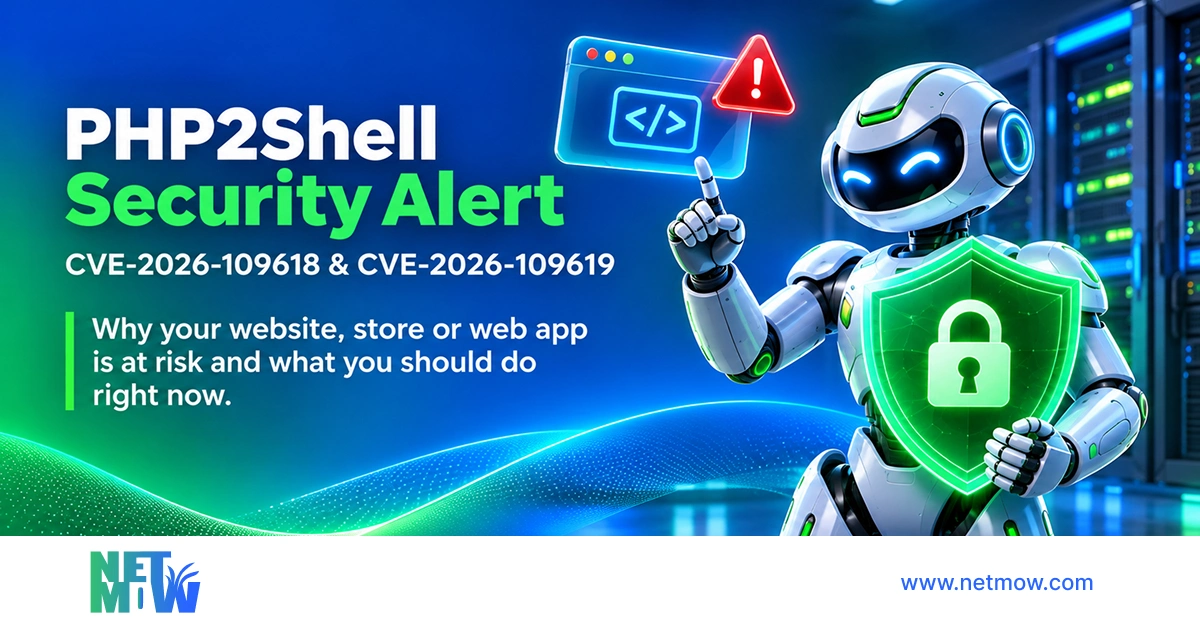
Urgent Security Alert: The “PHP2Shell” Vulnerability (CVE-2026-109618 & CVE-2026-109619) — Is Your Website or Store at Risk?
What Is Happening?
A critical pair of security flaws—collectively dubbed PHP2Shell (CVE-2026-109618 and CVE-2026-109619, rated up to 9.8 Critical)—has just been disclosed in the core PHP engine. Because PHP powers roughly 70% of the web, millions of websites, e-commerce stores, and web applications are currently exposed to active exploitation.
These flaws allow Pre-Authentication Remote Code Execution (RCE). In plain terms: an attacker can send a specially crafted request to your server and take complete control of your website, steal database credentials, or inject malware without needing a username, password, or admin login.
Why Updating Your Plugins or CMS Is Not Enough
Most website owners assume that keeping WordPress, Magento, or their plugins updated keeps them safe. With PHP2Shell, updating your CMS or plugins does nothing to stop the attack.
Because the vulnerability lives inside the underlying PHP engine itself (affecting versions dating all the way back to PHP 5.4.0 under default configurations), the exploit triggers before your website’s application code or security plugins even run. Even putting your site into “Maintenance Mode” at the CMS level will not block the attack.
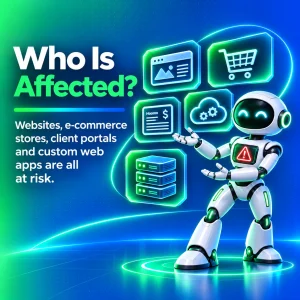
Who Is Affected?
Any website, e-commerce store, billing portal, or custom web application running on an unpatched PHP runtime (PHP 5.4.0 through unpatched PHP 8.x branches) is vulnerable.
Security researchers have already confirmed unauthenticated Remote Code Execution on clean, fully up-to-date installations of the most widely used platforms—including the key platforms highlighted in the latest vulnerability disclosures:
 CMS & Publishing Platforms: WordPress (up to 7.1.2), Drupal (up to 11.4.3), Joomla (up to 6.1.4), and MediaWiki (1.46.2)
- E-Commerce & Billing Systems: Magento (up to 2.4.9), WooCommerce stores, and WHMCS billing/hosting portals
- Custom Web Apps & Frameworks: Applications built on Laravel (up to 13.11) and Symfony (up to 8.1)
- Server, Cloud & Database Tools: phpMyAdmin (5.2.3), Nextcloud (35.0.1), and Roundcube webmail (1.7.4)
 CMS & Publishing Platforms: WordPress
You are especially at risk if:
- You run an E-Commerce Store or Client Portal: Sites running WordPress/WooCommerce, Magento, Laravel, or WHMCS handle sensitive customer data, payment flows, and API keys that can be scraped directly from server memory.
- You Use VPS, Dedicated, Cloud, or Docker Hosting: Even if a package update is downloaded, PHP-FPM workers, Apache modules (mod_php), and Docker containers remain 100% vulnerable until the underlying runtime binaries are properly reloaded, rebuilt, and verified.
- You Run Legacy PHP Versions (PHP 5.x, 7.x, 8.0, 8.1): Older PHP branches that have reached End-of-Life (EOL) do not receive standard automatic patches and require specialized mitigation, server-level WAF filtering, and safe migration strategies.
How NETMOW Protects Your Business
At NETMOW, we are actively deploying full remediation and resilience strategies to ensure your websites and applications stay secure and online without disrupting your business:
- Immutable Off-Site Backups & Snapshot Recovery: Before touching core server binaries, we establish verified, isolated backups of your files and databases so your business has a guaranteed clean restore point under any scenario.
- Core PHP Engine Patching & Worker Reloads: We upgrade your server runtime to the latest patched PHP builds (PHP 8.5.12, 8.4.27, 8.3.36, 8.2.x) and verify that your web SAPI (PHP-FPM / Apache / LiteSpeed / containers) is actively serving the patched build.
- Legacy App Protection & Server-Level Mitigations: If your custom Laravel, Magento, or legacy application cannot immediately upgrade its PHP version without breaking site functionality, we deploy server-level request filtering and memory-handling mitigations to block exploit payloads cleanly.
- Post-Patch Compromise Assessment & Key Rotation: Because PHP2Shell can expose server memory prior to patching, we check for unauthorized access and help rotate exposed session secrets, API keys, and database credentials.
Don’t Wait Until Your Server Is Compromised
Automated attack scans targeting PHP2Shell are already hitting servers worldwide in the millions. Don’t assume your hosting provider or automatic CMS updates have you covered.
Contact NETMOW now for a FREE security consultation and vulnerability check. Let our team verify your PHP runtime, lock down your backups, and patch your systems before attackers find an opening.